Slow customer support doesn't just frustrate people. It costs businesses repeat purchases, loyalty, and revenue. AI-powered support can reduce first response times from a reported industry average of 24.2 hours to as little as 23 seconds.
But answering faster isn't the same as solving faster. That's where AI workflow transformation comes in. By redesigning how support requests move from inquiry to resolution, businesses can eliminate delays without compromising service quality.
What Is AI Workflow Transformation in Customer Support?
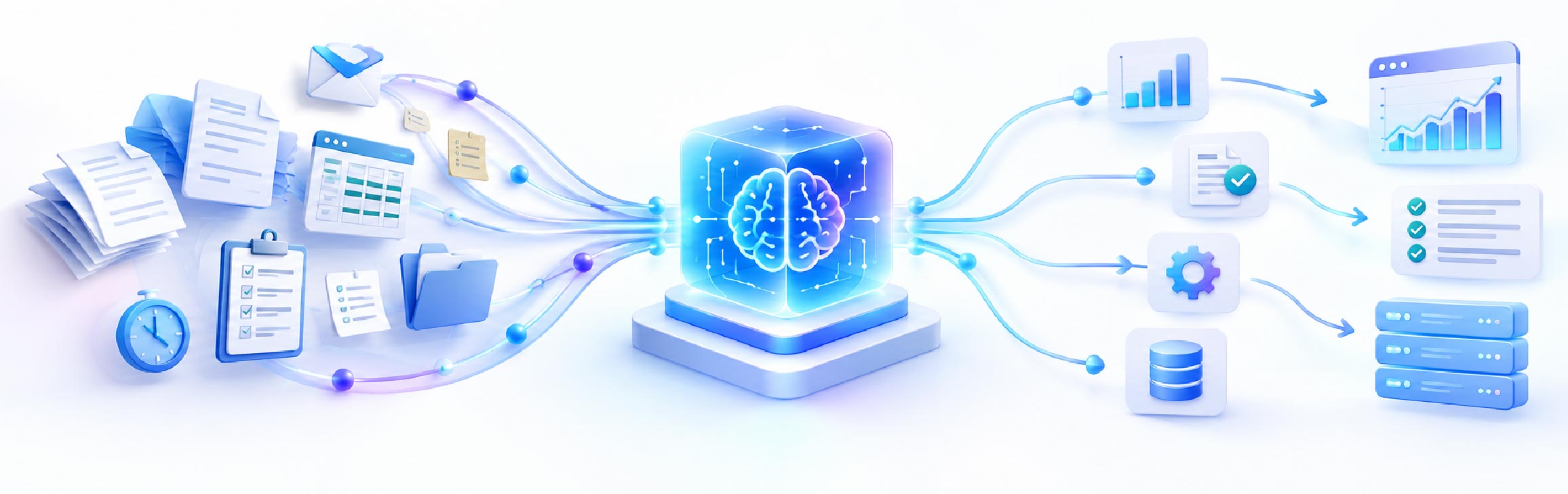
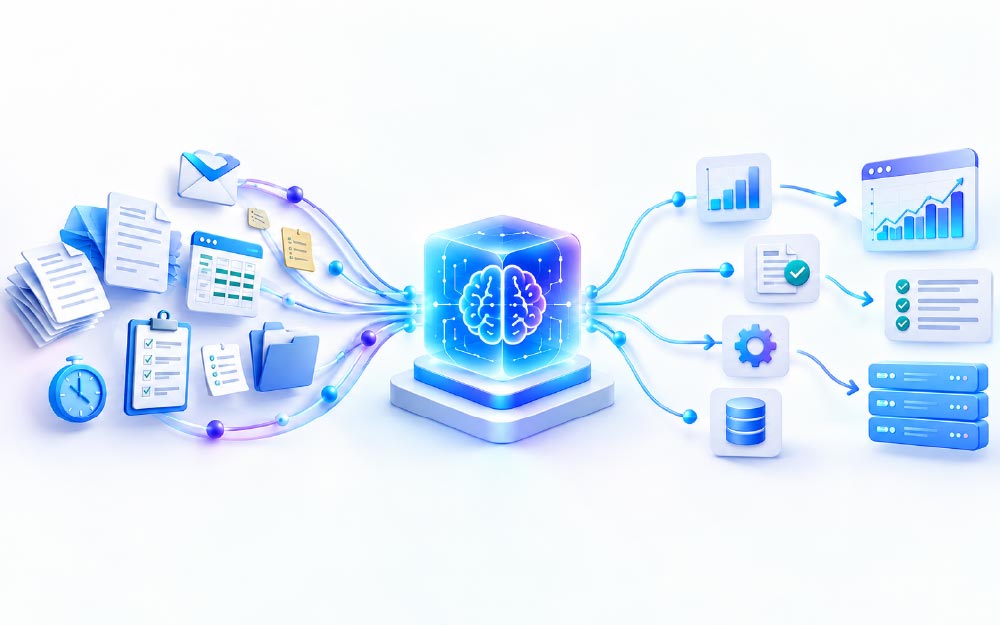
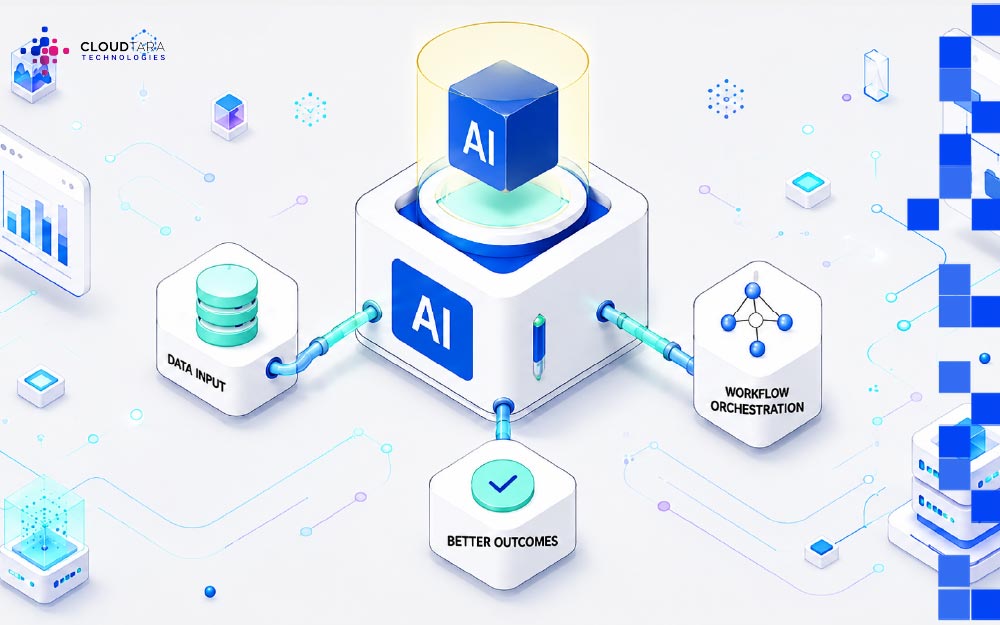
AI workflow transformation involves redesigning customer support processes using intelligent automation to manage ticket classification, routing, response generation, and escalations.
Unlike traditional chatbots that answer predefined questions, this approach connects the entire support journey. It uses customer context, business rules, and AI-driven decisions to move requests toward resolution.
The objective isn't simply fewer manual tasks. It's fewer unnecessary steps between a customer's problem and its solution.
Explore AI automation solutions for support teams.
Why Traditional Support Workflows Are Failing Businesses
Consider a customer reporting a failed payment. Their ticket enters a queue, waits for classification, moves between departments, and eventually reaches someone who can help.
The actual fix might take five minutes. Getting there could take hours.
Three recurring problems explain why:
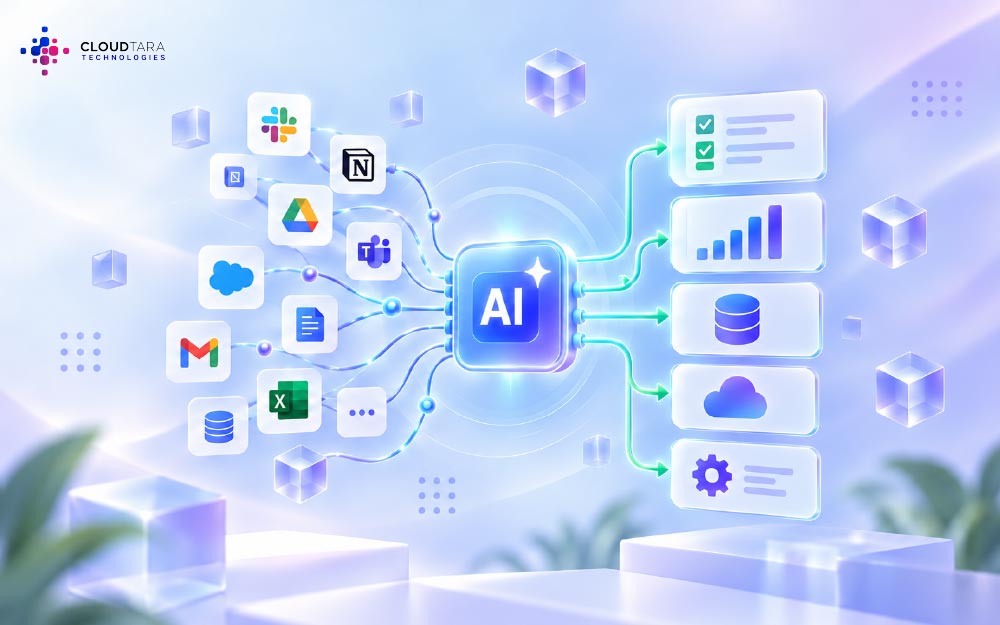
- Disconnected systems: Customer records, support tickets, and internal knowledge sit across multiple platforms.
- Manual triage: Agents spend valuable time categorizing requests and identifying ownership.
- Inconsistent handoffs: Missing context forces customers to repeat information, extending resolution times.
Better AI customer service starts by addressing these operational gaps, not simply adding another communication channel.
Key Ways AI Workflow Automation Speeds Up Resolution Times
Intelligent Ticket Routing and Triage
AI workflow automation evaluates incoming tickets based on intent, urgency, customer history, and issue complexity.
Instead of waiting for manual assignment, requests reach the appropriate team with relevant context attached. This reduces unnecessary transfers and prevents high-priority issues from disappearing into general queues.
AI-Powered Response Suggestions for Live Agents
Agents often spend more time finding information than communicating solutions.
AI copilots retrieve relevant knowledge articles, summarize conversations, and recommend next steps within the agent's workspace.
Freshworks reports that leading AI-enabled teams achieve messaging response times below 20 seconds, with many queries resolved in under two minutes. These are reported benchmarks, not guaranteed outcomes.
Automated Resolution of Tier-1 Support Tickets
Password resets, order tracking, subscription questions, and routine account updates rarely need complicated investigations.
With AI customer support automation, businesses can resolve eligible requests automatically by connecting AI to approved knowledge sources and operational systems.
The bigger advantage? Human agents can concentrate on exceptions, sensitive situations, and problems requiring judgment.
24/7 Support Without Proportional Staffing Growth
Customers don't restrict their problems to business hours.
AI automation for customer support allows routine issues to be addressed overnight, while complex requests are documented and escalated with context.
Real-World Results: AI Customer Support Automation in Action
The strongest evidence comes from organizations measuring actual outcomes rather than chatbot interactions.
Klarna: From 11 Minutes to Under 2 Minutes
In 2024, Klarna reported that its AI assistant reduced average customer-service resolution time from approximately 11 minutes to under two minutes.
The company also reported a 25% reduction in repeat inquiries, demonstrating why resolution quality deserves as much attention as speed.
AkzoNobel: From 5 Hours 42 Minutes to 70 Minutes
According to Glean's published analysis, AkzoNobel reduced average customer response time from five hours and 42 minutes to 70 minutes within a year.
Although response time differs from full resolution time, the improvement illustrates the value of removing delays from support operations.
The common lesson: AI delivers stronger results when it improves the workflow surrounding the interaction.
How to Reduce Customer Support Resolution Time with AI
Understanding how to reduce customer support resolution time with AI begins with examining where requests actually get stuck.
- Audit existing workflows. Measure resolution times, ticket volumes, handoffs, and recurring customer complaints.
- Identify automation opportunities. Prioritize repetitive, high-volume requests with clear resolution rules and low operational risk.
- Select the right platform. Evaluate AI automation capabilities, integration options, security, and human escalation controls.
- Connect existing systems. Integrate AI with helpdesk software, CRM platforms, knowledge repositories, and approved business applications.
- Measure and improve. Compare performance against baseline metrics and refine workflows using real customer outcomes.
Start with one measurable process. Expand when the results justify it.
Metrics to Track After Deploying AI Workflow Automation
Effective customer support automation should improve customer outcomes, not merely produce impressive dashboard numbers.
Key KPIs to Measure Customer Support Performance
- Average Resolution Time (ART): Measures the average time required to fully resolve a customer issue, helping businesses assess support efficiency.
- First Contact Resolution (FCR): Tracks the percentage of customer issues resolved during the first interaction without requiring additional follow-ups.
- Customer Satisfaction (CSAT): Measures how satisfied customers are with the support they receive, providing insights into service quality and customer experience.
- Ticket Deflection Rate: Tracks the percentage of support requests resolved through self-service channels, such as AI chatbots and knowledge bases, without human assistance.
- Escalation Rate: Measures the percentage of customer requests that require intervention from specialized support teams or higher-level agents.
Why tracking these KPIs together matters: Faster resolution times do not necessarily indicate better customer service. If repeat contacts or escalations increase while resolution times decrease, the improvement may be superficial. Monitoring these metrics together helps businesses balance operational efficiency with customer satisfaction and resolution quality.
Common Mistakes to Avoid in AI Customer Service Automation
Not every support interaction should be automated.
Over-automation: Complex billing disputes or emotionally sensitive complaints need clear human escalation paths.
Poor knowledge quality: AI systems connected to outdated policies can deliver incorrect answers faster.
Insufficient agent training: Employees need to understand AI recommendations, limitations, and override procedures.
Confusing deflection with resolution: A closed conversation doesn't necessarily mean a solved problem.
Successful AI customer service combines automation with accountability.
How CloudTara Helps Transform Customer Support Workflows
CloudTara approaches AI workflow transformation as an operational improvement initiative rather than a standalone chatbot deployment.
Through its AI consulting, workflow automation, and AI development capabilities, CloudTara helps enterprises assess existing processes, identify valuable use cases, and develop integrated automation solutions.
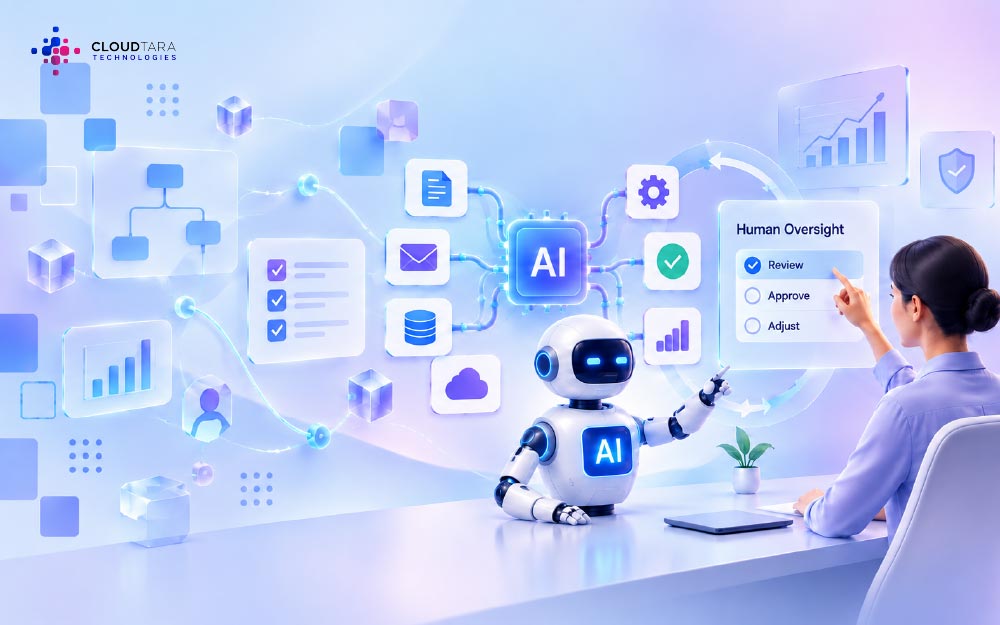
The focus is on connecting intelligent systems with actual business workflows while maintaining appropriate human oversight.
For teams exploring AI automation for customer support, that means starting with the process bottleneck and building toward measurable results.
Explore CloudTara's AI and Data Services.
The Future of AI Workflow Transformation in Customer Support
The next stage of AI workflow automation extends beyond answering questions.
Agentic AI can coordinate approved actions across systems. Predictive support can identify recurring issues before customers report them. Voice AI can streamline spoken interactions, while sentiment-aware escalation can help recognize frustration earlier.
The opportunity is substantial, but reliable governance will determine which capabilities deliver lasting value.
Final Thoughts
AI workflow transformation offers businesses a practical way to reduce support delays, improve agent productivity, and deliver more consistent customer experiences.
The real opportunity lies in redesigning how problems get solved, not just how quickly customers receive replies.
With the right strategy, AI workflow automation becomes a measurable operational advantage.
Ready to improve customer support resolution times? Connect with CloudTara to explore your next automation opportunity.