A significant share of enterprise IT budgets goes toward keeping existing systems running rather than building something new. Some organizations spend 60–80% on maintenance and operations, leaving limited room for innovation.
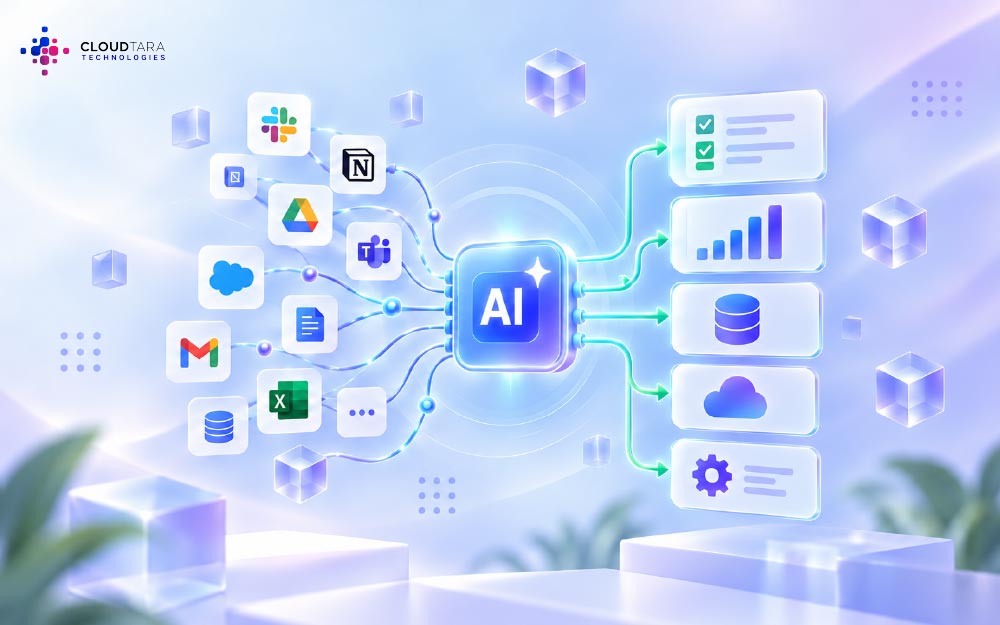
Incident management, application maintenance, cloud infrastructure, and support tickets quietly consume resources. AI automation offers CIOs a practical way to reduce these recurring expenses. But where should enterprises begin, and which changes actually deliver measurable savings?
What Are Software Run Costs and Why They Keep Rising?
Software run costs are the ongoing expenses businesses incur to maintain applications, infrastructure, and IT services after deployment. They include cloud hosting, software licensing, security monitoring, technical support, and incident resolution.
It is seldom that the issue lies with just one costly application. Instead, it is the cumulative effect of several minor inefficiencies which causes the issue.
Take the case of an organization that has 50 business applications in use. Each new integration adds a host of new maintenance requirements, monitoring tasks, and incident possibilities.
Hence, the busier the system gets, the costlier it is to maintain it even without corresponding increase in business value.
It can be concluded that in order to reduce the costs of IT maintenance, the company should analyze its technology maintenance process rather than just negotiate contracts for affordable infrastructure.
Where AI Automation Delivers the Biggest IT Cost Savings
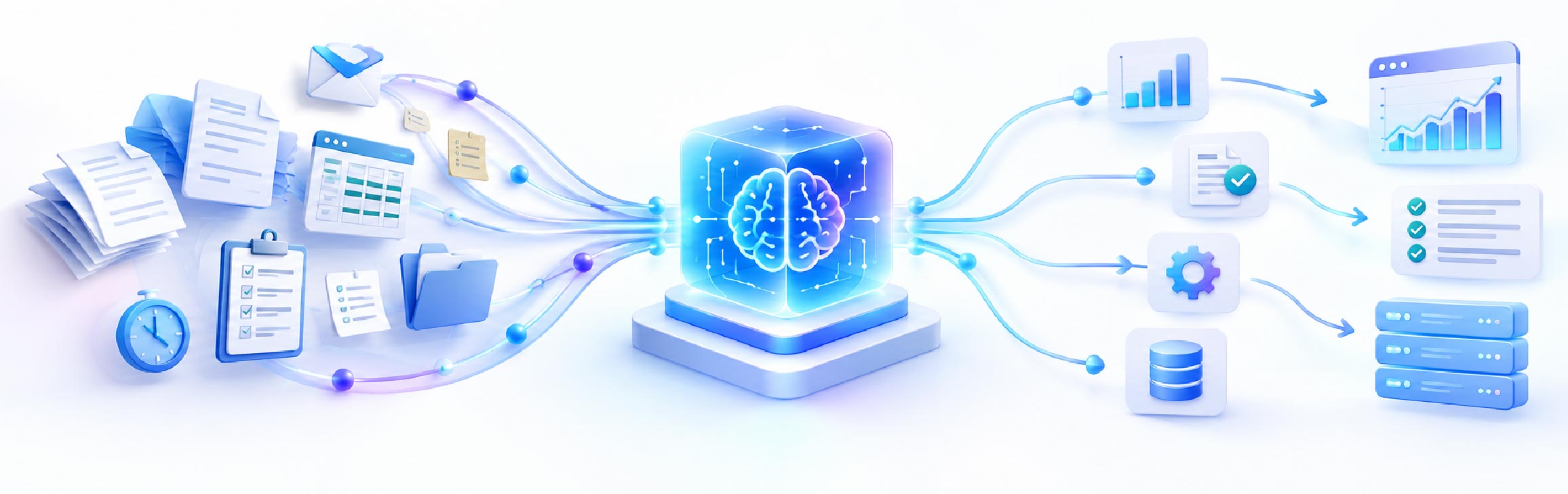
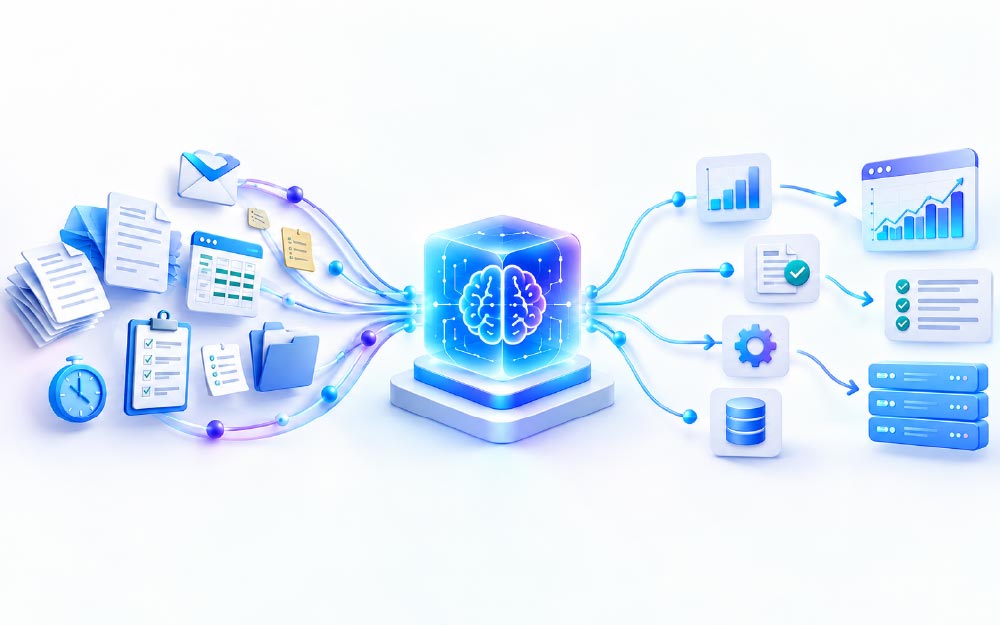
The strongest savings opportunities usually exist in repetitive workflows that consume engineering hours without requiring complex human judgment.
Automated Incident Detection and Resolution
Traditional incident management depends heavily on engineers identifying alerts, investigating failures, and restoring services.
AI-powered monitoring can detect unusual patterns, correlate alerts, classify tickets, and recommend corrective actions before incidents escalate.
For recurring, low-risk problems, approved remediation workflows can execute automatically. More complex issues remain with engineers.
The result? Less time investigating predictable failures, fewer unnecessary escalations, and potentially lower mean time to resolution (MTTR).
Intelligent Application Maintenance
Not every maintenance task needs an engineer working through it manually.
Artificial intelligence-powered tools are capable of providing the recognition of codes reused, creating the regression testing, analyzing the error logs as well as giving insight into ways of handling the recurring errors in one and the same unit of the system.
The above is essential given the fact that the costs of maintaining the software created by people usually increase together with increasing amounts of debts of the software.
In the industry it is commonly estimated that using AI in the process of development and maintenance of a particular software can lead to either a 20% or 60% decrease of expenses depending on how complicated the system is and how much the AI technologies were implemented in this system.
Cloud and Infrastructure Optimization
Cloud infrastructure is convenient until unused resources quietly become permanent expenses.
AI-enabled optimization tools can analyze workload patterns, identify idle environments, recommend right-sizing, and flag unusual consumption.
They can also improve cost allocation by connecting resource usage with departments, applications, and business activities.
For CIOs, this visibility is particularly valuable. A system that reveals unnecessary spending before the monthly invoice arrives makes IT cost optimization more proactive.
IT Operations Automation (AIOps)
Routine operational activities create another significant expense.
IT operations automation helps teams streamline log analysis, patch scheduling, performance monitoring, ticket routing, and infrastructure scaling.
Imagine an operations team receiving hundreds of alerts every morning. Instead of examining each one individually, an AIOps system groups related events and prioritizes those requiring intervention.
Engineers spend less time sorting noise and more time resolving genuine operational risks.
Key Statistics: AI Automation for IT Cost Reduction
Industry research offers useful benchmarks, although actual outcomes vary considerably across organizations.
Key Findings on AI-Driven IT Cost Optimization
- AI-Led Managed Services: According to YASH Technologies, AI-driven managed services can reduce total cost of ownership (TCO) by up to 50%, helping businesses optimize IT operations and resource utilization.
- AI-Assisted Development: Innov8World estimates potential cost reductions of 20–60% through AI-assisted development, primarily by improving developer productivity and automating repetitive tasks.
- Application Rationalization: According to Open iT, organizations can reduce application portfolio ownership costs by up to 30% through effective application rationalization and license optimization.
- Enterprise Application Rationalization: KPMG reported a case in which an organization achieved a 35% reduction in IT operating costs following application portfolio consolidation.
- IT Budget Waste: According to LeanIX, 82% of surveyed IT leaders estimated that at least 10–20% of their annual IT budgets were wasted, highlighting opportunities for cost optimization.
These figures illustrate why AI automation for IT cost reduction deserves serious consideration. However, some benchmarks include broader modernization and application consolidation initiatives, rather than automation alone.
The lesson is simple: technology savings emerge from eliminating unnecessary work, not merely introducing another tool.
A Practical Roadmap to Reduce IT Operational Costs with AI
Understanding how to reduce IT operational costs with AI starts with knowing where money and engineering time are currently going.
Step 1: Audit Existing Run Costs
Break down spending across infrastructure, application support, incident management, licensing, and maintenance. Identify which activities generate the highest recurring expenses and operational delays.
Step 2: Identify Repetitive Workflows
Examine recurring incidents, support requests, deployment checks, and manual reporting. Prioritize processes with high volumes, predictable decisions, and measurable time consumption.
Step 3: Pilot High-Impact Automation
Start with one workflow where benefits can be demonstrated quickly. For example, automate incident classification before attempting autonomous production remediation.
Step 4: Measure Results and Scale
Compare baseline metrics against pilot performance. Track MTTR, cost per ticket, engineering hours saved, cloud expenditure, and automation accuracy before expanding.
This measured approach makes AI automation for IT cost reduction a business initiative rather than another technology experiment.
Common Mistakes That Undermine AI Cost Reduction
Automation does not automatically make operations cheaper. Poor implementation can create additional infrastructure expenses and maintenance responsibilities.
Automating low-value activities: Saving five minutes on an infrequent task delivers little financial impact. Focus on workflows with substantial volume or operational consequences.
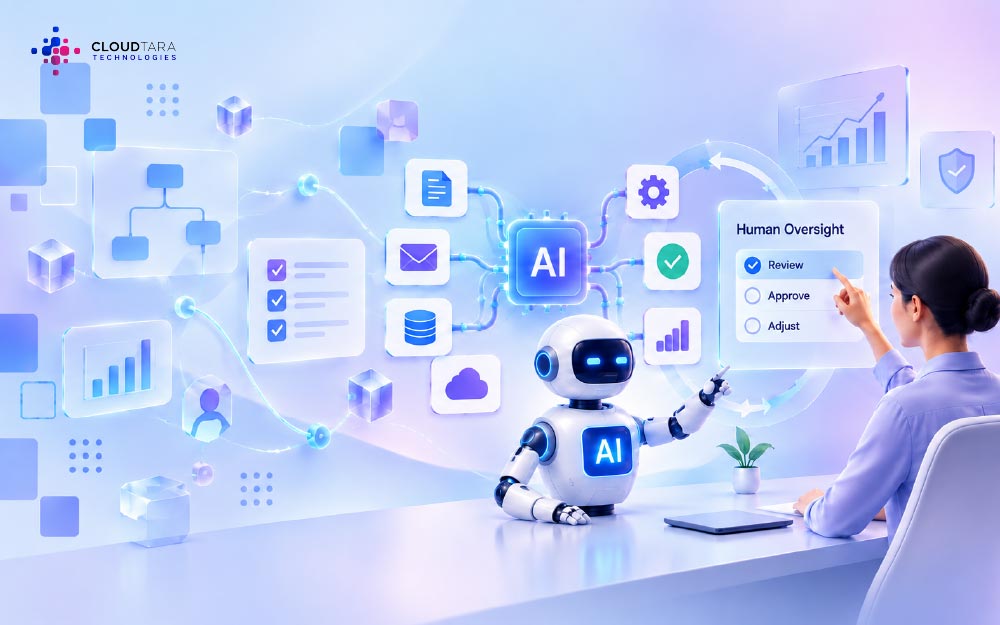
Ignoring human oversight: Allowing autonomous systems to modify critical infrastructure without approval controls introduces unnecessary risk. Clear escalation procedures and audit trails remain essential.
Using oversized AI models: Not every task requires a sophisticated language model. Deterministic scripts, rules-based automation, or smaller models may deliver equivalent results at lower costs.
The organizations that achieve sustainable savings tend to be selective rather than aggressive.
How CloudTara Helps You Reduce Software Run Costs
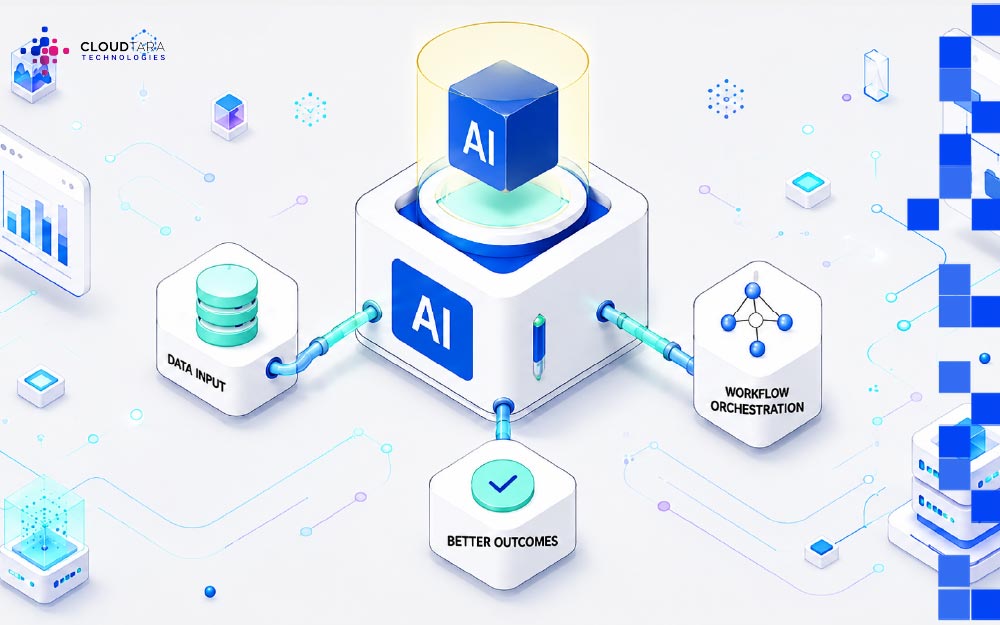
Reducing IT expenses requires more than identifying tasks suitable for automation. Businesses must connect those opportunities with existing applications, operational workflows, and measurable outcomes.
CloudTara approaches this through AI and data services, workflow transformation, intelligent automation, and infrastructure optimization.
Its capabilities support enterprises looking to streamline application operations, reduce repetitive support activities, improve monitoring, and build cost-conscious AI solutions.
Rather than introducing automation everywhere, CloudTara helps organizations identify practical opportunities, validate them through pilots, and develop solutions that can scale.
Explore CloudTara's consultation options to identify opportunities for reducing software run costs.
Final Thoughts
Software run costs are not entirely fixed, and enterprises have more control over them than they might assume. The right AI automation strategy can reduce repetitive operational work, improve incident response, and make infrastructure spending more predictable. Start with measurable problems, validate the financial impact, and scale only what delivers value.
Talk to a CloudTara expert and explore a practical IT cost reduction plan for your business.